info@memoriescappadocia.com
 +90 5543221703
 English
 Türkçe
 Русский
 Українська
 Español
 Français
 Deutsch
 中文
中文
 Български
 Română
 Ελληνικά
 हिन्दी
 Indonesia
 Italiano
 日本語
日本語
 Melayu
 Nederlands
 Norsk
Norsk
 Polski
 Português
 Српски
 Svenska
 العربية
 فارسی
فارسی
Cappadocia Underground Cities: The Hidden World Beneath the Fairy Chimneys


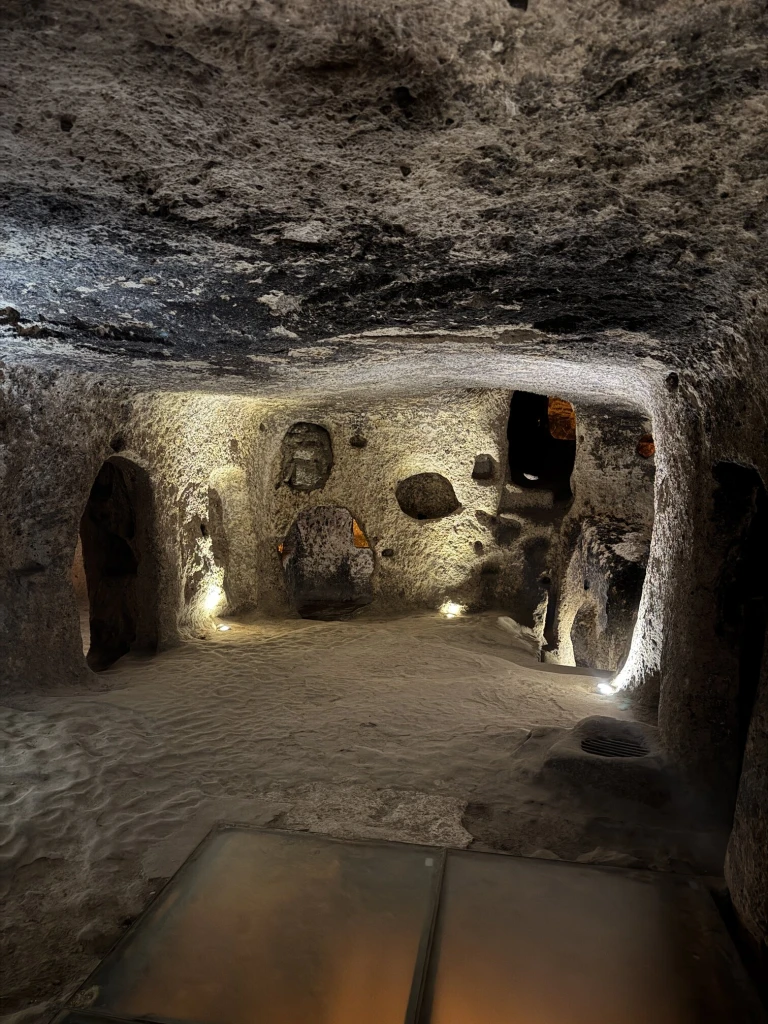
Cappadocia Underground Cities: The Hidden World Beneath the Fairy Chimneys
Most travelers come to Cappadocia for the fairy chimneys, dramatic valleys, and sunrise balloon flights. Yet one of the most extraordinary experiences in the region lies underground.
The Cappadocia underground cities form a vast subterranean network carved into volcanic rock thousands of years ago. Archaeologists estimate that nearly 100 underground cities exist across the region, although only around 10 underground cities in Cappadocia are open to visitors today.
Exploring an underground city in Cappadocia is not simply a tour — it is a journey into ancient engineering, survival strategy, and early Christian history.
How Old Are the Underground Cities in Cappadocia?
The origins of the underground cities date back nearly 4,000 years, possibly to the Hittite period. However, much of the structure visible today was expanded and organized during the Byzantine era, especially by early Christians in Cappadocia between the 4th and 10th centuries.
During times of invasion and instability, local communities needed safe refuges. Instead of building fortresses above ground, they created hidden defensive complexes beneath the earth.
This is why almost every major underground city includes a modest rock-cut church — a clear sign of the Christian communities who once sheltered there.
Derinkuyu Underground City: Eight Levels Below Ground
Among all the underground cities in Cappadocia, the most famous is Derinkuyu Underground City.
Derinkuyu descends approximately eight levels and reaches depths of nearly 60 meters. It could accommodate thousands of people, along with livestock, food storage rooms, kitchens, wine production areas, and ventilation shafts.
One of the most remarkable features of Derinkuyu is its advanced ventilation system and massive circular stone doors that could seal corridors from the inside. These doors were designed to block enemies and protect entire communities.
Today, Derinkuyu is one of the most visited underground cities in Cappadocia and a must-see attraction for anyone interested in history and archaeology.
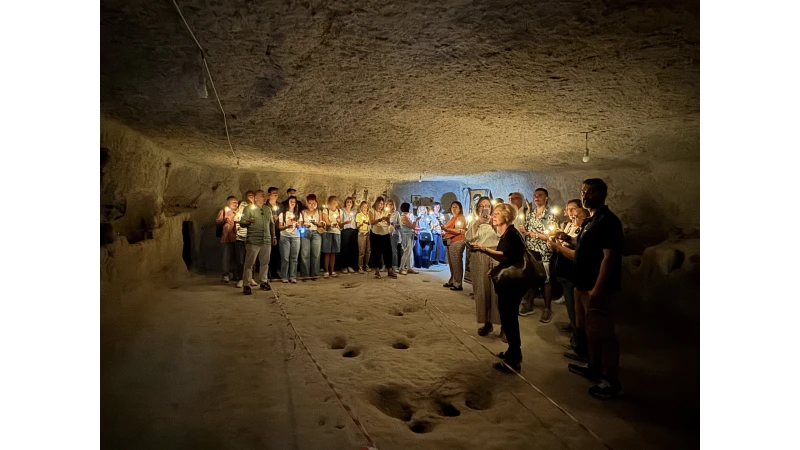
Kaymakli Underground City: A Labyrinth of Narrow Passages
Another major site is Kaymaklı Underground City.
Kaymakli Underground City extends across four main levels open to visitors, although the full system is believed to be much larger. Compared to Derinkuyu, Kaymakli features lower ceilings and narrower corridors, making the defensive design immediately noticeable.
The tight tunnels were not built because ancient people were shorter. They were intentionally constructed to prevent large groups of invaders from advancing together or carrying weapons easily.
Walking through Kaymakli gives visitors a realistic sense of what life underground may have felt like during times of danger.
What Was Life Like in an Underground City?
The underground cities were not permanent residences. They were emergency shelters.
When a threat appeared, families would descend underground and remain there until it was safe to return to the surface. Inside, they had access to:
- Ventilation shafts reaching the surface
- Protected water wells
- Communal kitchens
- Food and wine storage rooms
- Living quarters
- Simple churches and gathering spaces
These cities were carefully planned to support life for extended periods, demonstrating remarkable engineering skill for their time.
Why the Cappadocia Underground Cities Are Unique in the World
While caves exist in many parts of the world, the scale and complexity of the underground cities in Cappadocia are unique. Entire communities were able to hide, survive, and worship beneath the earth without being detected from above.
The combination of natural volcanic rock and human ingenuity created one of the most impressive defensive systems in ancient history.
For visitors planning their things to do in Cappadocia, exploring an underground city is essential. It offers not only historical insight but also a deeper understanding of the resilience and faith of the people who once lived here.
If you are planning a visit to Cappadocia and would like to explore the underground cities with detailed historical explanations, guided access, and local insight, we would be happy to assist you personally here in Cappadocia.
Our partners