info@memoriescappadocia.com
 +90 5543221703
 English
 Türkçe
 Русский
 Українська
 Español
 Français
 Deutsch
 中文
中文
 Български
 Română
 Ελληνικά
 हिन्दी
 Indonesia
 Italiano
 日本語
日本語
 Melayu
 Nederlands
 Norsk
Norsk
 Polski
 Português
 Српски
 Svenska
 العربية
 فارسی
فارسی
Farasa, Cappadocia: The Birthplace of Saint Paisios | Pilgrimage Guide


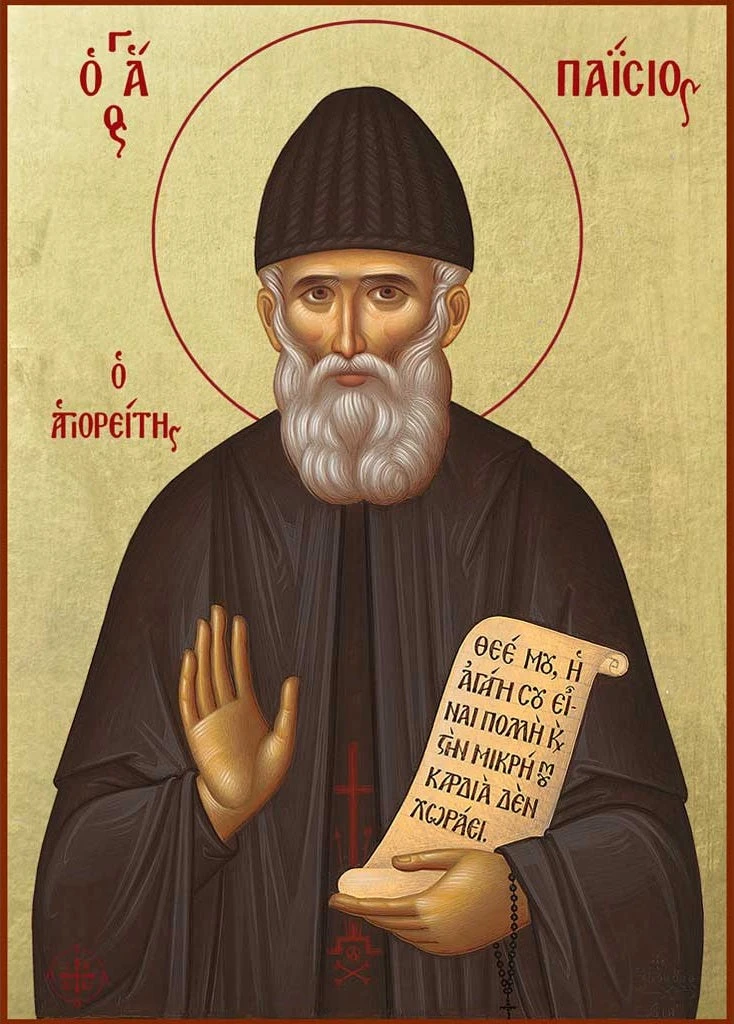
Farasa, Cappadocia: Walking in the Footsteps of Saint Paisios
In a quiet valley of Cappadocia, far from the balloon-filled skies of Göreme, sits a small stone village that most tourists never hear about. Its Greek name was Farasa. Today the local map calls it Çamlıca, in the Yahyalı district of Kayseri province. For Orthodox Christians around the world, this forgotten village holds an extraordinary significance: it is the birthplace of Saint Paisios of Mount Athos, one of the most beloved and widely venerated saints of the 20th century.
For pilgrims planning a trip to Cappadocia, a visit to Farasa is not simply sightseeing — it is a journey to the roots of a saint whose words, icons, and intercession are known in Orthodox homes from Greece to Australia to the United States.
Who Was Saint Paisios of Mount Athos?
Saint Paisios (born Arsenios Eznepidis) was born on July 25, 1924 (August 7, New Style) in Farasa, the ninth child of Prodromos Eznepidis, the village's mayor, and his wife Eulogia. Just three weeks after his birth, he was baptized by the village priest — Saint Arsenios the Cappadocian — who gave the infant his own name and reportedly foretold that the child would become a monk.
Barely a month later, the family was swept up in the 1924 population exchange between Greece and Turkey, forced to leave Farasa forever and begin a roughly 400-mile journey to a new life in Epirus, Greece.
Decades later, Arsenios became the monk Paisios, settling for most of his life on Mount Athos. He became known throughout the Orthodox world for his humility, his gift of spiritual discernment, his healing of the sick, and his deeply practical, often humorous counsel to the thousands of pilgrims who sought him out. He reposed in 1994 and was officially canonized by the Ecumenical Patriarchate of Constantinople on January 13, 2015. His feast day is celebrated on July 12.
Farasa: Cradle of a Modern Saint
Long before it produced a saint of world renown, Farasa was already known as a resilient island of Orthodoxy in the Ottoman heartland of Asia Minor. The Farasiot Greeks preserved their language, their liturgical life, and their traditions of fasting and prayer for centuries under difficult conditions, guided above all by their beloved priest, Father Arsenios.
Visiting Farasa today, pilgrims can:
- Walk the narrow streets of the old Greek quarter, largely unchanged since the early 20th century
- See the house associated with Saint Paisios's family, where he was born in 1924
- Visit the ruins of the Church of Saint Bartholomew, where Saint Arsenios served as priest and where the infant Paisios was baptized
- Take in the wider landscape of Cappadocia that shaped the young saint's earliest memories before his family's exile
The village's remoteness is part of its power. Unlike the well-trodden fairy-chimney valleys of central Cappadocia, Farasa still feels like a place suspended in time — which makes standing there, prayer rope in hand, a genuinely moving experience for Orthodox visitors.
Saint Arsenios the Cappadocian: The Priest Who Shaped a Saint
No account of Farasa is complete without Saint Arsenios the Cappadocian (1840–1924), himself canonized in 1986. For 55 years he served as the spiritual father of the Farasiot community, known for a life of prayer so powerful that locals said it "could split rock," and for healing both Christians and Muslims who came to him.
It was Arsenios who baptized the infant who would become Paisios — and it was Paisios who, decades later on Mount Athos, wrote the biography that brought his elder's life and sanctity to the wider Orthodox world. The bond between these two saints, one born in Farasa and one who died there in exile just months after leaving it, is part of what makes a pilgrimage to this village so layered with meaning.
Why Visit Farasa on a Guided Pilgrimage Rather Than Alone
Farasa lies well off the standard Cappadocia tourist circuit, in a rural area with limited signage and few English or Greek-speaking locals. A pilgrimage here is best experienced with a knowledgeable local guide who can:
- Take you directly to the sites connected with Saint Paisios and Saint Arsenios, without wasted time
- Provide the historical and spiritual context that turns a village visit into a true pilgrimage
- Combine Farasa with other early Christian and Cappadocian Father sites in the region
- Handle transportation across Cappadocia's rural roads, which can be difficult to navigate independently
[This is where you can describe your own tour in detail — itinerary, duration, group size, what's included, departure points, and a direct booking link. I've left this section as a placeholder so you can plug in your agency's specifics.]
Planning Your Pilgrimage to Cappadocia
Most Orthodox pilgrims combine a visit to Farasa with the broader wonders of Cappadocia — the rock-cut churches of the Göreme Open-Air Museum, underground cities like Derinkuyu, and the monastic history tied to the great Cappadocian Fathers: Saint Basil the Great, Saint Gregory of Nyssa, and Saint Gregory the Theologian. This makes the region a natural extension for anyone already drawn to the life of Saint Paisios.
Best time to visit: Spring and autumn offer the most comfortable weather for walking through the village and surrounding countryside.
What to bring: Comfortable walking shoes, modest clothing for visiting religious sites, and a camera or icon card to bring home a piece of the pilgrimage.
Frequently Asked Questions
Where exactly was Saint Paisios born? He was born in the village of Farasa, in the Cappadocia region of Asia Minor — today known as Çamlıca, in the Yahyalı district of Kayseri Province, Turkey.
Can you still visit the house where Saint Paisios was born? Yes. Farasa still stands, and pilgrims can visit the village and the sites connected to Saint Paisios's family and to Saint Arsenios the Cappadocian, though it requires local knowledge to find and access them meaningfully.
Is Farasa part of standard Cappadocia tours? No — it lies outside the usual Göreme/Ürgüp tourist routes and is rarely included in general Cappadocia itineraries. It is typically visited through a dedicated or private pilgrimage tour.
What else is nearby for Orthodox pilgrims? Cappadocia is closely tied to the Cappadocian Fathers and to early Christian monasticism, with rock-cut churches, monasteries, and underground cities throughout the region — making it easy to combine a Saint Paisios pilgrimage with a broader tour of Orthodox heritage sites.
Ready to walk in Saint Paisios's footsteps?Join Memories Cappadocia Travel's private pilgrimage tour to Farasa and the wider heritage sites of Cappadocia. Book your tour!
Our partners